

Cozumel News: Waste Generation Surges; Water Works and Recovery Underway in Sac-Tun
by Moises JH
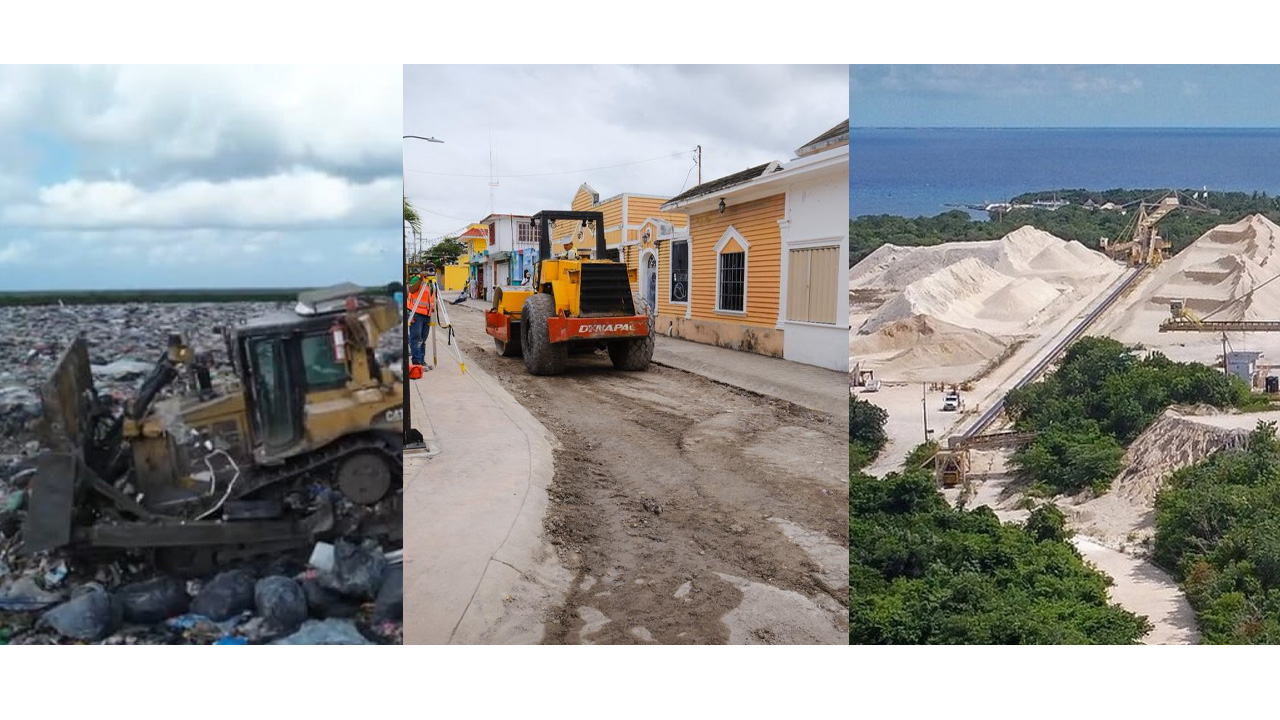
Cozumel records an average collection of 106 tons of solid waste per day in 2025.
The company Promotora Ambiental S.A. (PASA) presented its operational balance for the close of the 2025 fiscal year, reporting a total of 38,600 tons of solid waste collected in the municipality.
According to the official report, this figure establishes an average of 106 tons per day deposited at the final disposal site. Augusto Angulo Gómez, operations manager of the concessionaire, noted that the increase in waste generation remained within a margin of two additional tons per day compared to the previous annual period, linking this trend to population growth and commercial activity on the island.
Infrastructure and Environmental Management
During the presentation of results, the start of operations for Cell Number 10 of the sanitary landfill was confirmed. This infrastructure is specifically designed for waste confinement and leachate control, following technical protocols aimed at preventing seepage into the subsoil.
Angulo Gómez detailed the technical projections for the short and medium term:
- Launch: Cell 10 is currently receiving waste loads.
- 2026 Projects: The construction of Cells 11 and 12 is planned for the end of next year.
- Technical Objective: To ensure storage capacity given the region’s limestone soil characteristics and to prevent impact on aquifers.
The management of these spaces remains under supervision to ensure compliance with current regulations regarding final waste disposal in island zones.
Cozumel Infrastructure: Progress in Drainage and Water Supply in the Centro Neighborhood.
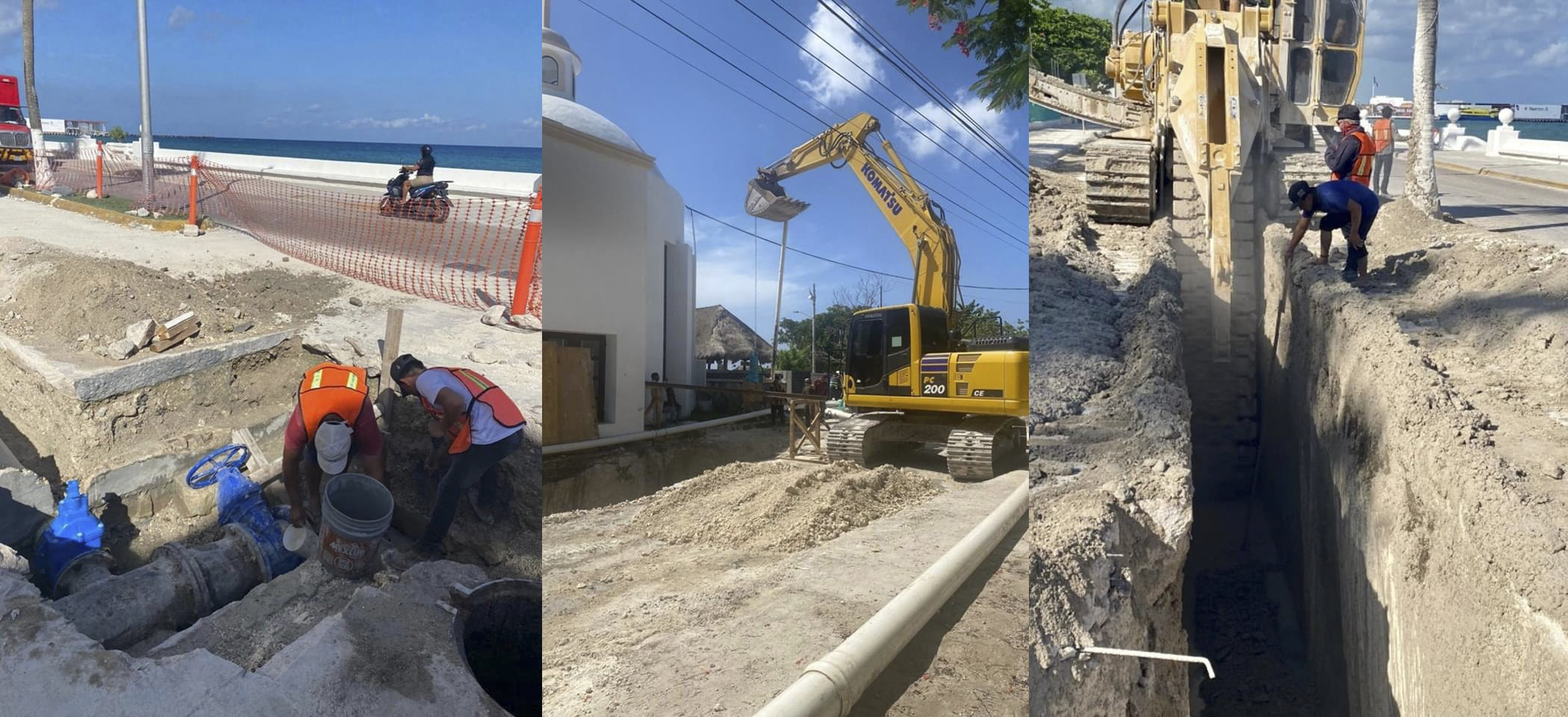
The Water and Sewage Commission (CAPA) concluded a series of inspections on infrastructure works being executed in the city’s main district. The central project consists of modernizing the drainage and water supply system, integrated simultaneously with paving works in the tourist and residential areas of the Downtown (Centro) district.
The director of the state-owned agency, Hugo Garza Sáenz, detailed that labor focused on streets such as 3 Sur and 20th Avenue. At these points, 500 linear meters of asbestos-cement pipes—which were over three decades old and exhibited structural failures—were replaced.
Modernization of the Sanitary System
With an investment of 6.1 million pesos, the work in the island’s center included:
- Renovation of sanitary drainage collectors.
- Construction of 9 manholes.
- Installation of 60 new domestic connections.
These efforts aim to prevent sewage spills and improve service efficiency in one of the areas with the highest influx of visitors and international residents.
Treatment Capacity and Environmental Sanitation
As part of the water infrastructure master plan, which has seen an investment of 354 million pesos since 2022, the expansion of the “San Miguelito” Wastewater Treatment Plant (PTAR) was highlighted.
The plant has doubled its operational capacity, increasing from processing 110 to 220 liters per second. Currently, technical teams are executing final interconnections and testing phases. These improvements at the PTAR ensure more efficient management of the island’s liquid waste, aligning with marine environment protection standards.
Projections for Potable Water Supply
For the current period, the administration is planning the installation of a reverse osmosis plant. This technical system is designed to increase water catchment and ensure stability in the supply of drinking water for domestic and commercial users in Cozumel.
Current Status of the Former Limestone Mine Lands in Quintana Roo
Nearly four years after the closure of extraction operations at the properties of the company Sac-Tun (formerly Calica)—a subsidiary of the U.S.-based Vulcan Materials Company—recent visual records show the current state of the 1,200 hectares located along the Mexican Caribbean coast.
State of Vegetation Recovery
Images obtained through a recent flyover indicate the presence of vegetation in areas that previously displayed exposed soil due to the use of explosives for limestone extraction. Comparison with 2022 records identifies flora growth in specific areas of the mine and near the Punta Venado pier, the point from which material was exported to the United States.
Bodies of water are visible on-site, corresponding to points where excavations reached the water table during the operational period.
Integration into the Natural Protected Area
Since May 2022, the mine has remained inactive by federal order. In September 2024, these lands were formally integrated into the new “Felipe Carrillo Puerto” Natural Protected Area (ANP). This reserve comprises a total of 53,227 hectares distributed across the municipalities of:
- Solidaridad
- Cozumel
- Tulum
The protected zone is home to 1,063 native species, representing 15% of the biodiversity recorded in the state of Quintana Roo. The inventory includes 437 types of plants, 170 invertebrates, and 418 vertebrates, including the jaguar, the spider monkey, and the howler monkey.
Restrictions and Legal Framework
The protection decree establishes a ban on 15 activities within the perimeter, most notably the extraction of construction materials. Previous studies pointed to a decrease in water levels in adjacent cenotes and underground rivers linked to the removal of stone material.
Currently, the final report on the environmental impacts of the mining operation remains classified. This measure is a response to the active international litigation process between Vulcan Materials Company and the Government.
Se dispara la generación de residuos, obras hídricas y recuperación en Sac-Tun.
by Moises JH
Cozumel registra recolección promedio de 106 toneladas diarias de residuos sólidos en 2025.
COZUMEL, QUINTANA ROO. – La empresa Promotora Ambiental S.A. (PASA) presentó el balance operativo correspondiente al cierre del ejercicio 2025, en el cual se contabilizó un total de 38 mil 600 toneladas de residuos sólidos recolectados en el municipio.
De acuerdo con el reporte oficial, esta cifra establece un promedio de 106 toneladas diarias depositadas en el sitio de disposición final. Augusto Angulo Gómez, gerente de operaciones de la concesionaria, señaló que el incremento en la generación de desechos se mantuvo en un margen de dos toneladas adicionales por día respecto al periodo anual previo, vinculando este comportamiento al desarrollo poblacional y la actividad comercial de la isla.
Infraestructura y Gestión Ambiental.
En el marco de la presentación de resultados, se confirmó el inicio de operaciones de la celda número 10 del relleno sanitario. Esta infraestructura está diseñada específicamente para el confinamiento de residuos y el control de lixiviados, bajo protocolos técnicos orientados a evitar filtraciones al subsuelo.
Angulo Gómez detalló las proyecciones técnicas para el corto y mediano plazo:
- Puesta en marcha: La celda 10 se encuentra actualmente recibiendo carga de residuos.
- Proyectos 2026: Se planifica la construcción de las celdas 11 y 12 para finales del próximo año.
- Objetivo técnico: Asegurar la capacidad de almacenamiento ante las características del suelo calizo de la región y la prevención de impacto en los mantos acuíferos.
El manejo de estos espacios se mantiene bajo supervisión para dar cumplimiento a las normativas vigentes en materia de disposición final de residuos en zonas insulares.
Infraestructura en Cozumel: Avances en drenaje y suministro de agua en la colonia Centro.
COZUMEL, QUINTANA ROO. – La Comisión de Agua Potable y Alcantarillado (CAPA) concluyó una serie de inspecciones en las obras de infraestructura que se ejecutan en el primer cuadro de la ciudad. El proyecto central consiste en la modernización del sistema de drenaje y suministro de agua, integrándose de forma simultánea con los trabajos de pavimentación en la zona turística y residencial del Centro.
El director de la paraestatal, Hugo Garza Sáenz, detalló que las labores se concentraron en calles como la 3 Sur y la avenida 20. En estos puntos, se realizó la sustitución de 500 metros lineales de tuberías de asbesto-cemento, las cuales contaban con más de tres décadas de antigüedad y presentaban fallas estructurales.
Modernización del sistema sanitario
Con una inversión de 6.1 millones de pesos, la obra en el centro de la isla incluyó:
- Renovación de colectores de drenaje sanitario.
- Construcción de 9 pozos de visita.
- Instalación de 60 nuevas tomas domiciliarias.
Estos trabajos buscan prevenir derrames de aguas residuales y mejorar la eficiencia del servicio en una de las áreas de mayor afluencia de visitantes y residentes internacionales.
Capacidad de tratamiento y saneamiento ambiental
Como parte del plan maestro de infraestructura hídrica, que suma 354 millones de pesos invertidos desde 2022, se destacó la expansión de la Planta de Tratamiento de Aguas Residuales (PTAR) “San Miguelito”.
La planta ha duplicado su capacidad operativa, pasando de procesar 110 a 220 litros por segundo. Actualmente, los equipos técnicos ejecutan las interconexiones finales y fases de prueba. Estas mejoras en la PTAR aseguran un manejo más eficiente de los residuos líquidos de la isla, alineándose con los estándares de protección del entorno marino.
Proyecciones para el suministro de agua potable.
Para el presente periodo, la administración contempla la instalación de una planta de ósmosis inversa. Este sistema técnico está diseñado para incrementar la captación y asegurar la estabilidad en el suministro de agua potable para los usuarios domésticos y comerciales de Cozumel.
Situación actual de los predios de la antigua mina de piedra caliza en Quintana Roo.
A casi cuatro años de la clausura de las operaciones de extracción en los predios de la empresa Sac-Tun (anteriormente Calica), filial de la compañía estadounidense Vulcan Materials Company, registros visuales recientes muestran el estado actual de las 1,200 hectáreas ubicadas en el litoral del Caribe Mexicano.
Estado de la recuperación vegetal
Imágenes obtenidas mediante un sobrevuelo reciente indican la presencia de vegetación en zonas que anteriormente presentaban suelo expuesto debido al uso de explosivos para la obtención de piedra caliza. La comparación con registros de 2022 permite identificar el crecimiento de flora en áreas específicas de la mina y en las inmediaciones del muelle de Punta Venado, punto desde donde se exportaba el material hacia los Estados Unidos.
En el sitio se observan cuerpos de agua que corresponden a los puntos donde la excavación alcanzó el nivel del manto freático durante el periodo operativo.
Integración al Área Natural Protegida
Desde mayo de 2022, la mina ha permanecido sin actividad por orden federal. En septiembre de 2024, estos terrenos fueron integrados formalmente a la nueva Área Natural Protegida (ANP) “Felipe Carrillo Puerto”. Esta reserva comprende un total de 53,227 hectáreas distribuidas en los municipios de:
- Solidaridad
- Cozumel
- Tulum
La zona bajo protección alberga 1,063 especies nativas, lo que representa el 15% de la biodiversidad registrada en el estado de Quintana Roo. El inventario incluye 437 tipos de plantas, 170 animales invertebrados y 418 vertebrados, entre los que se encuentran el jaguar, el mono araña y el mono aullador.
Restricciones y marco legal
El decreto de protección establece la prohibición de 15 actividades dentro del perímetro, destacando la extracción de materiales de construcción. Estudios previos señalaron una disminución en los niveles de agua de cenotes y ríos subterráneos colindantes, vinculada a las labores de remoción de material pétreo.
Actualmente, el dictamen final sobre los impactos ambientales de la operación minera se mantiene bajo reserva oficial. Esta medida responde al proceso de litigio internacional activo entre la empresa Vulcan Materials Company y el Gobierno de México.

Antonio Lopez .Bachelor of Communication Sciences and Techniques with 13 years of experience in the media.
- Cozumel 4 You NEWS - March 13, 2026
- Cozumel 4 You NEWS:No 4th Pier on Cozumel - March 6, 2026
- Cozumel 4 You NEWS :FPMC Osprey & AMEXME Princess Run - February 27, 2026





Subscribe to Our Newsletter
Bringing You the Bright Side of Cozumel Every Week



Cozumel News
Cozumel City Council Begins Efforts to Repair the Historic Clock at Benito...
Cozumel 2026: A Tax Guide for Expats
Cozumel 2026: A Comprehensive Tax Guide for Expats and Visitors—New Levies, Property...










Leave a comment