

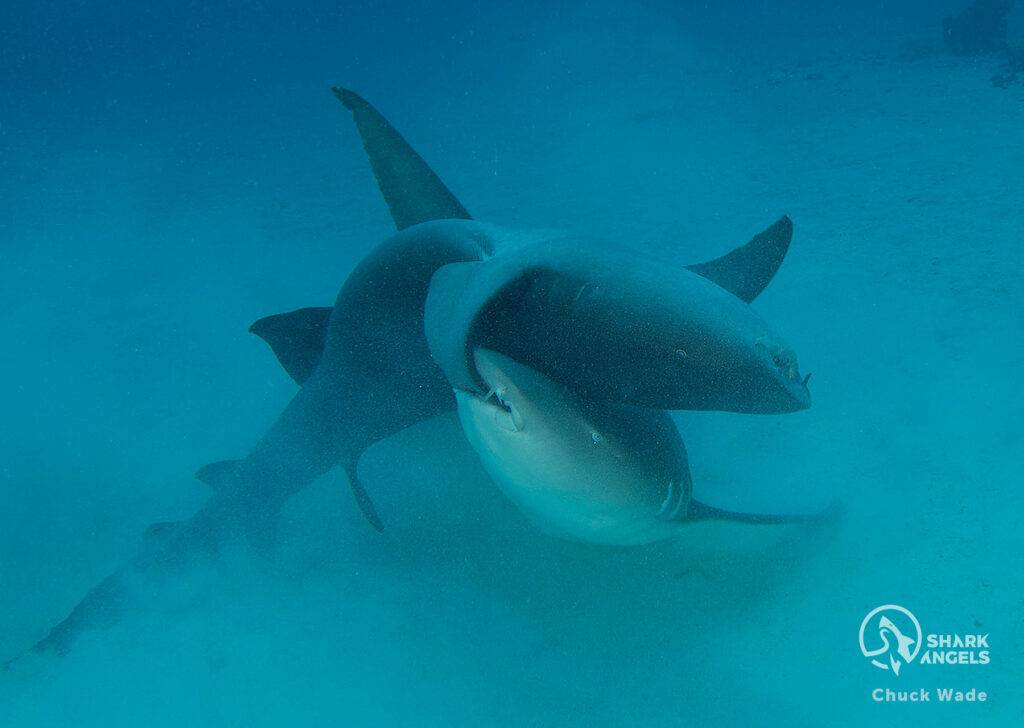
Love in the Shallows: Nurse Sharks Put On a Rare Late Season Mating Show
text and translation by Laura Wilkinson
If you were lucky enough to be floating off a quiet stretch of reef this last August, you might have caught one of the ocean’s more surprising courtship rituals: nurse sharks mating. Yes, the famously mellow bottom-dwellers—often spotted napping in sandy patches like underwater cats—can get decidedly lively when romance is in the water.
Witnesses described swirling clouds of sand, the flash of pale underbellies, and a whirl of fins as a group of nurse sharks came together for their seasonal matchmaking session. It’s not as rare as a solar eclipse, but it’s definitely not something the average snorkeler gets to check off their bucket list.
So what’s actually going on during this splashy spectacle?
Sharks in the Mood
Nurse shark mating usually happens in late spring through early summer, though in warm regions it can stretch longer. Instead of the elegant gliding we’re used to, mating involves bursts of energy: males following females closely, gentle nips, body twists, and lots of sand kicked up as they roll along the bottom. It’s not exactly a candlelit dinner—but in nurse shark terms, it’s romance.
Meet the Nurse Shark
If you’re picturing a huge, ferocious predator, forget it. Nurse sharks (Ginglymostoma cirratum) are the laid-back loungers of the shark world. Here’s what makes them special:
Size: Usually 7–9 feet long, sometimes up to 10–14 feet for the big old-timers.
Lifestyle: They love resting—on ledges, in caves, on the sand—often piled together like sleepy Labradors.
Diet: Crabs, lobsters, sea urchins, small fish… basically whatever they can hoover up from the seafloor with their strong suction-feeding mouths.
Disposition: Calm and generally non-aggressive. They don’t go looking for trouble and are often content to let divers drift nearby.
Habitat: Found in warm, shallow waters of the western Atlantic, Caribbean, and Gulf of Mexico.
And no, nobody’s completely sure why they’re called “nurse” sharks, but one theory is that their sucking sound when feeding reminded early observers of a nursing infant.
A Courtship Worth Watching—Respectfully
During mating season, several males may pursue a single female, and the action can look chaotic. The female often guides the process, choosing when and where to settle. Once she’s ready, a male gently bites her pectoral fin to hold her in place—a normal part of shark courtship—and the pair lines up for the brief mating event.
After the commotion ends, it’s back to business as usual: resting, cruising, and vacuuming up snacks.
Why This Matters
Nurse sharks are long-lived, slow to reproduce, and important parts of reef ecosystems. Seeing them mate is a reminder of how much activity is happening just beneath the surface—and how valuable it is to protect their habitat so these calm, quirky creatures can keep thriving.
So if you ever find yourself drifting over the shallows and spot a whirl of tan-colored fins stirring up a sandy cloud, congratulations—you may just be witnessing one of the ocean’s most intimate natural performances.
Raro Apareamiento de Tiburones Nodriza Captado en Cozumel
text and translation by Laura Wilkinson
Los visitantes del Parque Ecológico Punta Sur en Cozumel recibieron esta semana algo más que aguas turquesa y palmeras meciéndose con la brisa: tuvieron asiento de primera fila para uno de los espectáculos naturales más inusuales del océano: el apareamiento de tiburones nodriza, captado en cámara con todo su torbellino de arena y aletas.
El sorprendente material fue registrado durante una sesión rutinaria de monitoreo de fauna marina realizada por la Fundación de Parques y Museos de Cozumel, en colaboración con el videógrafo y documentalista Sean Rowan. Lo que comenzó como trabajo de campo habitual terminó convirtiéndose en un inesperado triunfo científico.
Y hay que decirlo: esto es importante. Aunque los tiburones nodriza (Ginglymostoma cirratum) son una vista común descansando en el fondo o deslizándose tranquilamente por los arrecifes, presenciar su apareamiento es excepcionalmente raro. El evento aporta información valiosa sobre el comportamiento de una especie que los investigadores de la zona están ansiosos por comprender mejor.
Por qué los tiburones nodriza son clave
Los biólogos en el sitio destacaron rápidamente la importancia ecológica del hallazgo. Los tiburones nodriza están incluidos en la Lista Roja de la UICN y protegidos por la normativa ambiental mexicana. A pesar de su famosa actitud dócil—son prácticamente los “holgazanes zen” del mundo de los tiburones—desempeñan un papel crucial en el ecosistema.
Como depredadores tope, ayudan a mantener el equilibrio de las poblaciones de peces e invertebrados, actuando como cuidadores silenciosos del arrecife. Su presencia suele ser una buena señal de un entorno marino saludable. Por ello, los científicos los consideran bioindicadores, ya que su abundancia y comportamiento reflejan el estado general del hábitat.
Una ventana a la salud marina de Cozumel
El inesperado registro del apareamiento no solo es emocionante—también es alentador. Los especialistas señalaron que observaciones no invasivas como esta son fundamentales para entender cómo la vida silvestre utiliza los espacios protegidos. El monitoreo continuo en Punta Sur permite evaluar la calidad del hábitat, seguir tendencias de las especies y fortalecer las estrategias de conservación.
Y en el caso del tiburón nodriza, cada dato cuenta. Es una especie de maduración lenta y reproducción limitada, por lo que depende profundamente de ecosistemas estables y saludables para sostener sus poblaciones.
Protegiendo el patrimonio vivo de Cozumel
Este evento subraya por qué los esfuerzos continuos de investigación y conservación en Cozumel son tan importantes. Proteger a las especies clave, aquellas con una influencia desproporcionada en el ecosistema, ayuda a mantener el equilibrio delicado de los arrecifes y las zonas costeras de la isla. Con presiones crecientes como el desarrollo, el calentamiento de las aguas y el impacto turístico, momentos como este brindan información y motivación.
Por ahora, las estrellas del espectáculo han vuelto a su rutina habitual: descansar sobre la arena, recorrer los arrecifes y cumplir silenciosamente su papel en mantener sano el mundo submarino de Cozumel.
Pero gracias a un poco de suerte—y a una cámara que estaba grabando en el momento justo—tenemos una rara ventana a su vida íntima y un motivo más para celebrar la rica y resistente vida marina de la isla.

______________________________
Una ex yanqui de Connecticut quien llama hogar a Cozumel desde hace más de 15 años. Laura escapó al Caribe hace años, desplazándose de una isla a otra dando clases de BUCEO. Se dedicó a perder el tiempo en Jamaica y finalmente se detuvo en Cozumel para pasar unas vacaciones de 2 semanas que aún no terminan. Convenciendo a sus padres que pagaran una elegante universidad privada, obtuvo su título en Periodismo y Laura crea semanalmente Cozumel 4You, medios sociales y artículos promocionales sobre la Isla y también es moderadora en el grupo Cozumel 4 You en Facebook que actualmente cuenta con 25,000 miembros. Fabián, s umuy tolerante marido, desde hace mucho tiempo se resignó a no tener vida privada, pues se ha visto implicado en los diversos proyectos y planes que urde Laura. Son orgullosos padres de diversos perros y gatos rescatados. Mientras contempla su paso a través de la vida en el Caribe mexicano,Laura continúa siendo la pesadilla en la existencia de su muy tradicional suegra mexicana.
- Cozumel Seaweed 2026 - August 7, 2026
- Cozumel Turtle Season 2026 - August 7, 2026
- Cozumel 4 You NEWS - August 7, 2026






Subscribe to Our Newsletter
Bringing You the Bright Side of Cozumel Every Week


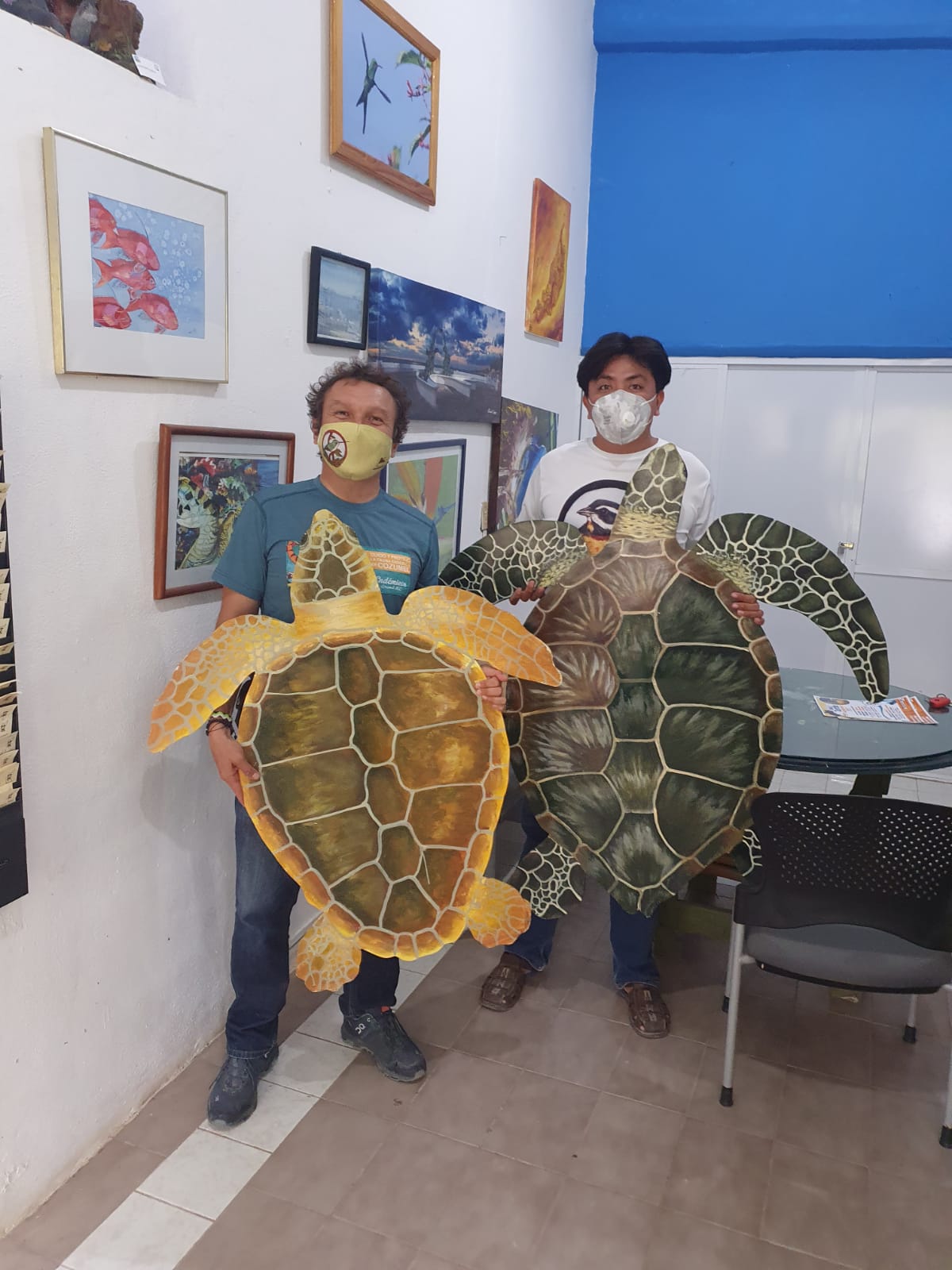
Cozumel Turtle Season 2026
Cozumel’s Sea Turtle Nesting Season Is in Full Swing Every summer, sea...
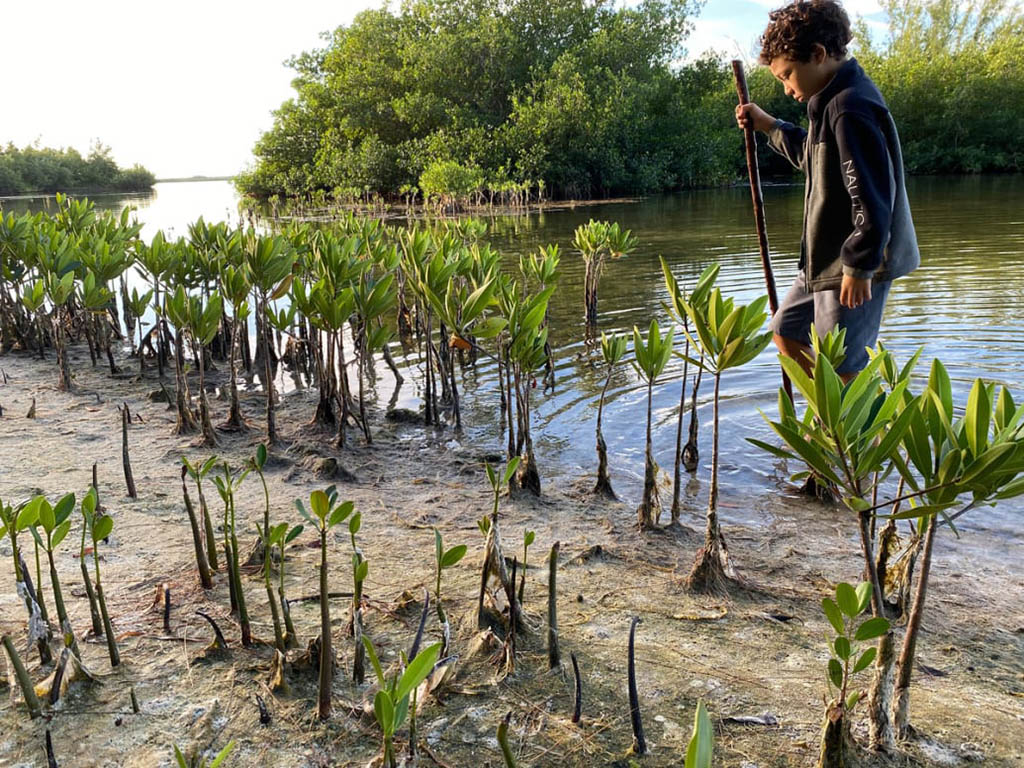
Cozumel Mangrove Restoration
Cozumel Hotels Lead by Example in Mangrove Restoration Effort The Cozumel Hotel...









Leave a comment