

Popcorn, a very ancient snack whose origins are in Mexico
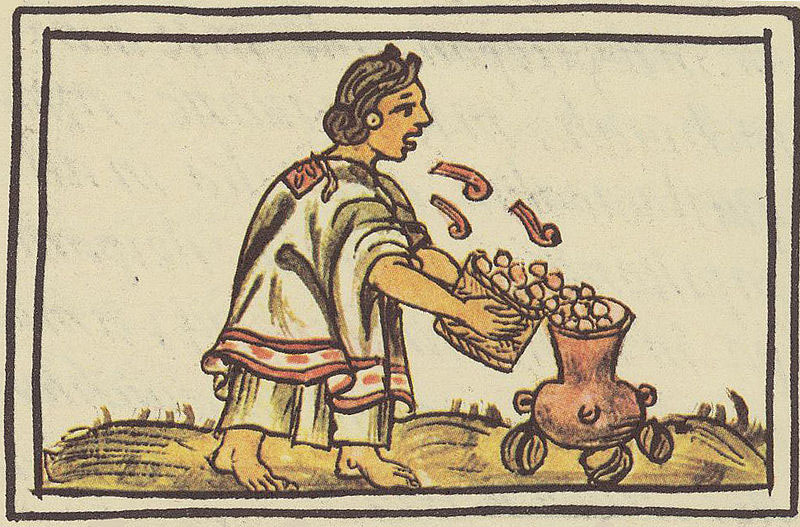
In his famous writings Historia General de las Cosas de Nueva España [General History of the Things of New Spain] (16th century), Franciscan missionary and Spanish historian Bernardino de Sahagún shared his amazement at seeing the Aztecs roast corn kernels over a fire and watch them open up like flowers, which they referred to as momochtli or momoxtli (“little piece of heaven”) and the “popping kernels” as totopoca. In the myths of the ancient civilizations of America, especially the Aztecs and Mayans, “popping corn” was an important part of creation and was used not only as food and decoration, but also for offerings and rituals dedicated to gods such as Tlaloc and Chaac because “it resembles hail… every kernel is a very white flower” (Sahagún). The Spanish missionary narrates that maidens danced adorned with headbands and necklaces made of popcorn, and popcorn was even used in ceremonial headdresses. Popcorn was revered as a sacred gift. Among the Maya, it was a symbol of abundance, prosperity, and spirituality, representing the connection with the Earth and the gods.
Archaeological records reveal that growing popcorn began in Mexico 9,000 years ago, and it is believed that its consumption in its popped form predated that of tortillas. At that time, kernels (ixi’im in Maya) were prepared by placing them in very hot clay pots or directly on burning ashes. The oldest popcorn found so far dates back to 3600 BC at Cueva de los Murciélagos (Bat Cave) in Nuevo León, Mexico; and a corn pollen fossil dating back 80,000 years was also found in Mexico.
Around 1885, an inventor from Chicago designed the first commercial popcorn machine. By the 1920s, popcorn had become popular in the United States, and by the mid-20th century, became a very important part of movie theaters.
Today, there are many ways to prepare these snacks that originated in Mexico. And, fun fact, did you know that World Popcorn Day is celebrated every January 19?

Palomitas de maíz, una botana muy antigua que se originó en México
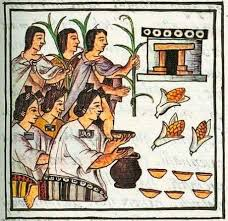
En sus famosos escritos Historia general de las cosas de Nueva España (S. XVI), el misionero franciscano e historiador español Bernardino de Sahagún compartió su asombro al ver que los aztecas tostaban los granos de maíz al fuego y que éstos se abrían en forma de flor a los que se referían como momochtli o momoxtli (“cachito de cielo”) y a los “granos reventando” como totopoca. En los mitos de las antiguas civilizaciones de América, en especial los aztecas y los mayas, el “maíz reventador” era parte importante de la creación y se usaba no sólo para consumo y decoración, sino también para ofrendas y rituales dedicados a dioses como Tlaloc y Chaac pues “semeja al granizo … cada grano es una flor muy blanca” (Sahagún). Cuenta el misionero español que las doncellas danzaban ataviadas con tocados y collares hechos de palomitas de maíz y se usaban hasta en penachos ceremoniales. El maíz palomero se veneraba como un regalo sagrado. Entre los mayas era un símbolo de abundancia, prosperidad y espiritualidad, representando la conexión con la Tierra y los dioses.
Existen registros arqueológicos que revelan que el maíz palomero comenzó a cultivarse en México hace 9,000 años y se cree que el consumo en su forma reventada fue muy anterior al de las tortillas. En aquel entonces, para su preparación se colocaban los granos (ixi’im en maya) en ollas de barro muy calientes o directamente sobre las cenizas ardientes. Las palomitas más antiguas que se han encontrado hasta ahora datan de 3600 aC. en la Cueva de los Murciélagos en Nuevo León, México; y también en México hallaron un fósil de polen de maíz con una antigüedad de 80,000 años.
Alrededor de 1885 un inventor estadounidense de Chicago diseñó la primera máquina comercial para hacer palomitas de maíz. Para la década de 1920, las palomitas de maíz se popularizaron en Estados Unidos y a mediados del siglo XX se convirtieron en parte muy importante en los cines.
Hoy en día hay muchas formas de preparar botana cuyos origines son mexicanos. Y, dato curioso, ¿sabían que cada 19 de enero se celebra el Día Mundial de las Palomitas de Maíz?

Otra fugitiva de la Ciudad de México. Mónica ha hecho de Cozumel su hogar definitivo. Desde su llegada en 1981, trabajo en turismo en todos los lugares habituales: hoteles, buceo, aeropuerto, ferries, hasta que se abrió la oportunidad de desempeñarse en su campo. Desde finales de la década de los años 70 Mónica ha estado traduciendo e interpretando, dedicándose plenamente a ello a partir de 1998, y ha asistido a extranjeros y locales de la Isla a establecer su residencia y sus negocios. Es traductora con gran experiencia, ávida historiadora y una gran fuente de tradiciones y leyendas locales.
- Popcorn Mexico - January 24, 2026
- Mexican History 3 Kings Day - January 16, 2026
- Additional Information Mexican Cell phones - January 9, 2026





Subscribe to Our Newsletter
Bringing You the Bright Side of Cozumel Every Week

Mexican History 3 Kings Day
Mexican History 3 Kings Day The Significance of January 6th & February...

Mayan Weather Predictions
Mayan Weather Predictions Honoring Traditions: “Las Cabañuelas,” Mayan Weather Predictions The weather...
Christmas Mexico Monica Sauza
Christmas Mexico Monica Sauza Christmas in Mexico by Monica Sauza The celebration...

Cozumel Malecon Melgar
How Cozumel’s Waterfront Street Got It’s Name If you’ve ever strolled Cozumel’s...






Leave a comment