

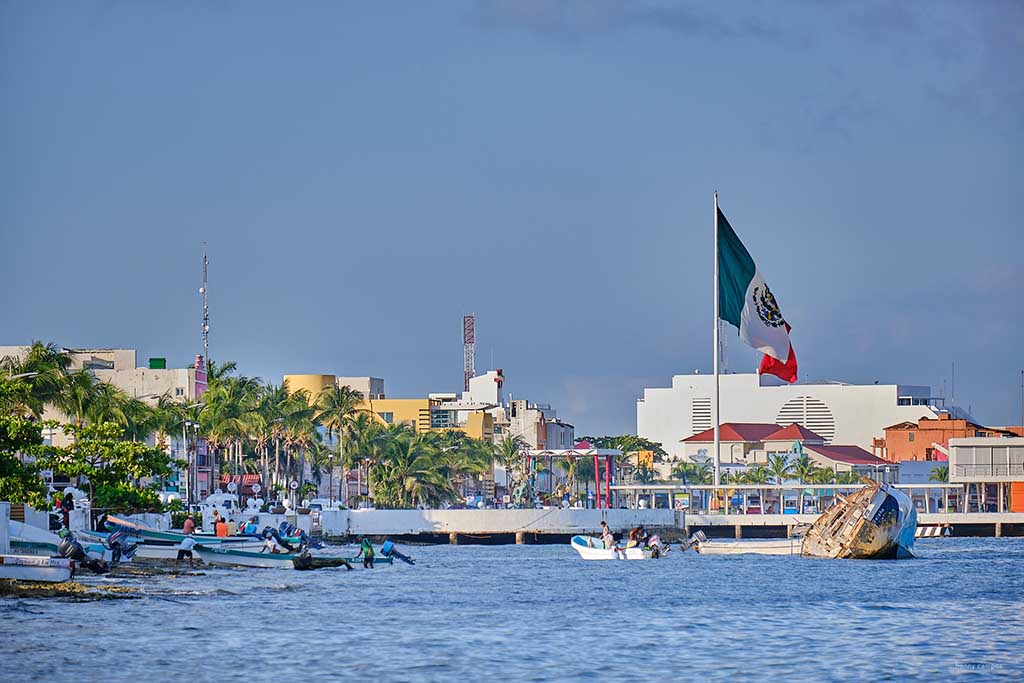
Cozumel Is Not Cheap. But It Depends on Who You Are.
By José Villalvazo
This is the first of ten articles on what life in Cozumel actually looks like — for the people who live it every day.
There are essentially three kinds of people living on this island.
There are the families who have been here for generations — the ones who know every street, every shortcut, and every person worth knowing. The island is theirs in a way nobody else can claim, and they will outlast every trend, every hurricane, and every wave of newcomers who arrive convinced they have discovered something.
There are the people who came from all over Mexico — from the Yucatán peninsula, from Mexico City, from Monterrey, from everywhere in between — looking for opportunity in the tourism industry. They came with ambition and very little else, built their lives here from scratch, and in many cases built the island’s economy along with it. They know what the island costs because they have paid for it in ways that don’t show up on any spreadsheet.
And then there are the rest of you.
The retirees. The remote workers. The snowbirds. The people whose income arrives from somewhere else — a pension, a portfolio, a laptop, a social security check — and whose primary relationship with the Cozumel economy is figuring out how much of it they have to give back every month.
This article is mostly for the third group. Though the first two will recognize everything in it — and probably smile.
The Island Reality
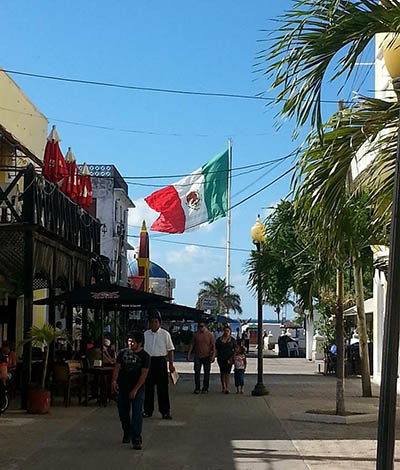
Cozumel produces exactly three things: garbage, money, and happiness.
Everything else arrives by boat.
That is not a metaphor. There is almost no local produce on this island. There are no local brands. Every bag of cement, every box of cereal, every bottle of wine, every roll of toilet paper made its way here on a cargo ferry — and that logistics chain has a price that gets added, quietly and without apology, to everything you buy.
The island premium runs 20 to 30 percent above mainland Mexican prices. Not occasionally. Not when you are being careless. Always. Consider it the entry fee for living surrounded by the largest reef in the Americas and the Northern Hemisphere.
Electricity — The Bill Nobody Warned You About
Your first real introduction to island economics will arrive in your mailbox every two months.
Mexico’s Federal Electricity Commission — CFE — uses a tiered pricing system. The more you consume, the higher your rate climbs. Not gradually. It jumps. In a tropical climate where air conditioning is not a luxury but a basic act of self-preservation, you will cross those thresholds. The only question is how far.
A modest apartment running AC regularly can generate a bimonthly bill of $80 to $400 USD. Larger homes with pools and full-time cooling pay more. Sometimes considerably more.
The 26-degree rule is the first thing every long-timer learns — set your AC there, not at 20. The difference in your bill is significant. 26 degrees is not suffering. 20 degrees is a donation to CFE. Beyond that, watch your tariff. Some residents have been billed under the wrong rate for years without knowing it — your correct zone in Cozumel is 1D, and if your bill shows “DAC” you are already in the highest consumption bracket paying premium rates. Check it now, not later. And if you are serious about staying on this island long term, start thinking about solar. Not as a lifestyle statement. As a financial decision.
Groceries — What the Island Offers
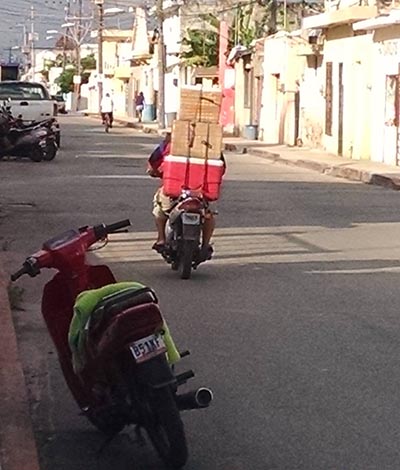
There is very little local produce. There are no local brands. Everything arrives by boat, on its own schedule, in whatever quantity made it onto the ferry that week.
The island premium applies across the board. There is no budget option that sidesteps it entirely. You are paying for the logistics every time, at every store, for every product.
Cozumel has options — Chedraui, Soriana, Mega, Super Aki, and Sam’s Club each serve different budgets. But the selection is what it is. Some weeks the thing you need is there. Some weeks it isn’t.
The islanders have a word for that moment when the shelf is empty and the next delivery date is unknown.
They call it Tuesday.
One more thing about money at the checkout. There are no fractional coins in Cozumel. The merchant keeps the difference. If you question it, they tend to get annoyed. This is not a policy. It is just how things work. Consider it a very small, very consistent, entirely unofficial island tax.
Same Island. Very Different Wallet.
The price on the shelf is only part of the story. What you actually pay on this island — for the ferry, for services, for healthcare, for basic banking — depends largely on who you are here and what your legal status allows you to access. A tourist, a temporary resident, and a permanent resident are three different people with three different price tags. That distinction matters more than most newcomers realize.
The people who built their lives here on local income — the old families, the arrivals from across Mexico who found their place in the tourism economy — live a completely different financial reality than the expat or snowbird whose check arrives from abroad.
The island’s economy is raw and seasonal. It revolves around cruise tourism — approximately 4.6 million passengers a year, each spending an average of four to five hours on the island. When the ships come, there is money. When they don’t — low season, hurricanes, a global pandemic — there isn’t.
Building a life on local income here requires resilience and a clear understanding of that cycle. The people who do it are not having the same cost-of-living conversation as the retiree with the pension check. They are playing a different game entirely, in the same place, on the same island.
That context matters. Because as an expat or snowbird, you are a guest in someone else’s economy. The more you understand that, the better neighbor you will be.
The Ferry Doesn’t Care Who You Are
Whether your money comes from inside the island or outside it, some costs are universal.
The ferry to Playa del Carmen is your lifeline — mainland hospitals, airports, shopping, and the occasional reminder that the rest of the world still exists. Three companies operate the crossing: Ultramar, Winjet, and Xcaret. Fares depend on who you are. The tourist price and the resident price are not the same. Legal residency gets you the lower fare, and for anyone crossing regularly, that difference adds up to real money over a year.
It is one of the quieter financial arguments for formalizing your immigration status. We cover that in full in Part 3 of this series.
The Honest Numbers
So what does all of this actually translate to in real money? Two honest ranges — not promises, not a brochure, just forty years of watching people arrive and figure it out. A single person living simply — basic rental away from downtown and the beach, somewhere between $400 and $600 USD a month, cooking at home, managing electricity consciously — can live here comfortably for under $2,000 USD per month. A couple living comfortably — decent rental, regular meals out, ferry crossings, reasonable AC, some quality of life beyond pure survival — should budget between $3,000 and $4,500 USD per month. The island premium is fixed. Everything else is yours to manage.
How Cozumel Compares
Mérida runs about 25 percent cheaper than Cozumel across most categories. Mexico City’s Roma Norte is similar — except rent and household help actually cost more there now, thanks to gentrification. San Miguel de Allende? Essentially the same cost as Cozumel, with restaurant prices running slightly higher. The island is not cheap. But it is not selling the same thing as those cities either.
Before You Go
So — which one are you? The answer matters more than any number in this article. Because on this island, your cost of living is not just about what things cost. It is about who you are when you pay for them.
One last thing. There is a conversation we have not had yet — about how to bring your money into Mexico efficiently, and how much you lose if you don’t do it right. That conversation is coming. Stay tuned.
What was your first CFE bill — and did you cry?
Drop your answer in the comments. You are not alone. We promise.
Next: Part 2 — Healthcare on the Island. Because the day you need a doctor on this island is not the day you want to be figuring out your options for the first time.
José Villalvazo has lived in Cozumel since 1983. Over four decades he has been a student, entrepreneur, director of a cultural theme and experience park, president of a federation of businessmen, developer of tourism excursions, and diver. He writes from experience, not from a brochure.per of tourism excursions, and diver. He writes from experience, not from a brochure.
El verdadero costo de vivir en Cozumel
Parte 1 de 10 — La vida en la Isla de expatriados y turistas que huyen del inverno.
Cozumel No Es Barato. Pero Todo Depende de Quién Eres.
Este es el primero de diez artículos sobre cómo es la vida en Cozumel — para los que la viven todos los días.
En esta isla hay, básicamente, tres tipos de personas.
Están las familias que llevan aquí generaciones — los que conocen cada calle, cada atajo, y a cada persona que vale la pena conocer. La isla es suya de una manera que nadie más puede reclamar, y van a sobrevivir a todas las modas, a todos los huracanes, y a todas las oleadas de recién llegados que aparecen convencidos de haber descubierto algo.
Están los que llegaron de todas partes de México — de la península de Yucatán, de la Ciudad de México, de Monterrey, de donde sea — buscando oportunidades en la industria turística. Llegaron con ganas y con poco más, construyeron su vida aquí desde cero, y en muchos casos construyeron la economía de la isla junto con ella. Ellos saben lo que cuesta vivir aquí porque lo han pagado de formas que no aparecen en ninguna hoja de cálculo.
Y luego están los demás.
Los jubilados. Los que trabajan a distancia. Los snowbirds. Los que reciben su dinero de otro lado — una pensión, una inversión, una laptop, un cheque del seguro social — y cuya relación principal con la economía de Cozumel es calcular cuánto de ese dinero tienen que devolver cada mes.
Este artículo es principalmente para ese tercer grupo. Aunque los otros dos van a reconocer todo lo que viene — y probablemente van a sonreír.
La Realidad de la Isla
Cozumel produce exactamente tres cosas: basura, dinero y felicidad.
Todo lo demás llega en barco.
Eso no es una metáfora. Aquí casi no hay productos locales. No existen marcas locales. Cada bulto de cemento, cada caja de cereal, cada botella de vino, cada rollo de papel de baño llegó en un ferry de carga — y esa cadena logística tiene un costo que se le agrega, callada y sin disculpa, a todo lo que compras.
El sobreprecio de la isla ronda entre el 20 y el 30 por ciento por encima de los precios del México continental. No de vez en cuando. No cuando uno no pone atención. Siempre. Considéralo el costo de entrada para vivir junto al arrecife más grande de América y del Hemisferio Norte.
La Luz — El Recibo Que Nadie Te Advirtió
Tu primera introducción real a la economía de la isla va a llegar al buzón cada dos meses.
La Comisión Federal de Electricidad — CFE — usa un sistema de tarifas escalonadas. Entre más consumes, más sube tu tarifa. Y no de a poco. Pega de golpe. En un clima tropical donde el aire acondicionado no es un lujo sino una necesidad básica de supervivencia, vas a cruzar esos umbrales. La única pregunta es por cuánto.
Un departamento modesto con aire corriendo regularmente puede generar un recibo bimestral de entre 80 y 400 dólares. Las casas más grandes con alberca y clima de tiempo completo pagan más. A veces bastante más.
La regla de los 26 grados es lo primero que aprende todo el que lleva tiempo aquí — pon el aire ahí, no en 20. La diferencia en tu recibo es significativa. 26 grados no es sufrir. 20 grados es hacerle una donación a la CFE. Aparte de eso, revisa tu tarifa. Hay residentes que han estado pagando con la tarifa equivocada durante años sin saberlo — tu zona correcta en Cozumel es la 1D, y si tu recibo dice “DAC” ya estás en el nivel de consumo más alto pagando tarifas premium. Revísalo ahorita, no después. Y si en serio piensas quedarte en esta isla a largo plazo, empieza a pensar en los paneles solares. No como declaración de estilo de vida. Como decisión financiera.
El Super — Lo Que la Isla Tiene
Casi no hay productos locales. No hay marcas locales. Todo llega en barco, con su propio horario, en la cantidad que cupo en el ferry de esa semana.
El sobreprecio aplica parejo. No hay opción de presupuesto que lo esquive del todo. Estás pagando la logística cada vez, en cada tienda, con cada producto.
Cozumel tiene opciones — Chedraui, Soriana, Mega, Super Aki y Sam’s Club atienden distintos presupuestos. Pero la selección es la que es. Hay semanas que lo que necesitas está. Hay semanas que no.
Los isleños tienen una palabra para ese momento en que el anaquel está vacío y nadie sabe cuándo llega el próximo surtido.
Le llaman martes.
Una cosa más sobre el dinero en la caja. En Cozumel no existen las monedas fraccionarias. El comerciante se queda con el diferencial. Si lo cuestionas, tienden a molestarse. No es una política. Así funcionan las cosas. Considéralo un impuesto isleño muy pequeño, muy constante, y completamente no oficial.
Misma Isla. Muy Diferente Cartera.

El precio en el estante es solo parte de la historia. Lo que realmente pagas en esta isla — por el ferry, por los servicios, por la atención médica, por los servicios bancarios básicos — depende en gran medida de quién eres aquí y a qué te da acceso tu situación migratoria. Un turista, un residente temporal y un residente permanente son tres personas distintas con tres listas de precios distintas. Esa diferencia importa más de lo que la mayoría de los recién llegados se imagina.
La gente que construyó su vida aquí con ingresos locales — las familias de siempre, los que llegaron de todo México y encontraron su lugar en la economía turística — vive una realidad financiera completamente diferente a la del expat o snowbird cuyo cheque llega del extranjero.
La economía de la isla es cruda y estacional. Gira alrededor del turismo de cruceros — aproximadamente 4.6 millones de pasajeros al año, cada uno con un promedio de cuatro a cinco horas en la isla. Cuando llegan los barcos, hay dinero. Cuando no llegan — temporada baja, huracanes, una pandemia global — no hay.
Construir una vida con ingresos locales aquí requiere resiliencia y un entendimiento muy claro de ese ciclo. Los que lo logran no están teniendo la misma conversación sobre el costo de vida que el jubilado con su pensión. Están jugando un juego completamente diferente, en el mismo lugar, en la misma isla.
Ese contexto importa. Porque como expat o snowbird, eres un invitado en la economía de alguien más. Entre más lo entiendas, mejor vecino vas a ser.
El Ferry No Sabe Quién Eres
Ya sea que tu dinero venga de adentro o de afuera de la isla, algunos costos son universales.
El ferry a Playa del Carmen es tu línea de vida — hospitales en tierra firme, aeropuertos, compras, y el recordatorio ocasional de que el resto del mundo todavía existe. Tres empresas operan la travesía: Ultramar, Winjet y Xcaret. Las tarifas dependen de quién eres. El precio de turista y el precio de residente no son iguales. La residencia legal te da la tarifa más baja, y para cualquiera que cruce regularmente, esa diferencia suma dinero de verdad a lo largo del año.
Es uno de los argumentos financieros más silenciosos a favor de formalizar tu situación migratoria en lugar de quedarte indefinidamente con visa de turista. Lo cubrimos completo en la Parte 3 de esta serie.
Los Números Honestos
¿A qué se traduce todo esto en dinero real? Dos rangos honestos — no promesas, no folleto turístico, solo cuarenta años viendo llegar a la gente y verla acomodarse. Una persona sola viviendo de manera sencilla — renta básica lejos del centro y de la playa, entre 400 y 600 dólares al mes, cocinando en casa, cuidando el consumo de luz — puede vivir aquí cómodamente por menos de 2,000 dólares al mes. Una pareja viviendo bien — buena renta, salidas a comer, viajes en ferry, aire acondicionado razonable, algo de calidad de vida más allá de pura supervivencia — debe presupuestar entre 3,000 y 4,500 dólares al mes. El sobreprecio de la isla es fijo. Todo lo demás está en tus manos.
Cómo Se Compara Cozumel
Mérida sale aproximadamente un 25 por ciento más barato que Cozumel en la mayoría de los rubros. La Roma Norte en la Ciudad de México es similar — excepto que la renta y el servicio doméstico ahora cuestan más allá, gracias a la gentrificación. ¿San Miguel de Allende? Prácticamente lo mismo que Cozumel, con los restaurantes saliendo un poco más caros. La isla no es barata. Pero tampoco está vendiendo lo mismo que esas ciudades.
Antes de Irte
Entonces — ¿cuál eres tú? La respuesta importa más que cualquier número en este artículo. Porque en esta isla, el costo de vida no se trata solo de lo que cuestan las cosas. Se trata de quién eres tú cuando las pagas.
Una última cosa. Hay una conversación que todavía no hemos tenido — sobre cómo traer tu dinero a México de la manera más eficiente, y cuánto pierdes si no lo haces bien. Esa conversación viene. No te vayas.
¿Cuánto te llegó tu primer recibo de la CFE — y lloraste?
Déjanos tu respuesta en los comentarios. No estás solo. Te lo prometemos.
Siguiente: Parte 2 — Salud en la Isla. Porque el día que necesitas un médico en esta isla no es el día que quieres estar descubriendo cuáles son tus opciones por primera vez.
José Villalvazo vive en Cozumel desde 1983. En cuatro décadas ha sido estudiante, empresario, director de un parque temático cultural y de experiencias, presidente de una federación de empresarios, desarrollador de excursiones turísticas, y buzo. Escribe desde la experiencia, no desde un folleto.

- Cozumel Ex Pat Living - September 4, 2026
- Retiring Cozumel - August 21, 2026
- Cozumel Transportation - August 7, 2026






Subscribe to Our Newsletter
Bringing You the Bright Side of Cozumel Every Week


Mexican Women History Antonia Nava de Catalán
Mexican Women History Antonia Nava de Catalán Mexican women who made history...

Cozumel Firefighter Hero
Local Hero Cozumel Firefighter Foils Robbery A firefighter helped stop an alleged...

Cozumel Real Estate Stable
Is Cozumel’s Real Estate Market Unstable or Simply More Selective? Every real...







Leave a comment